
Use case
Restore Antique Studio Portraits
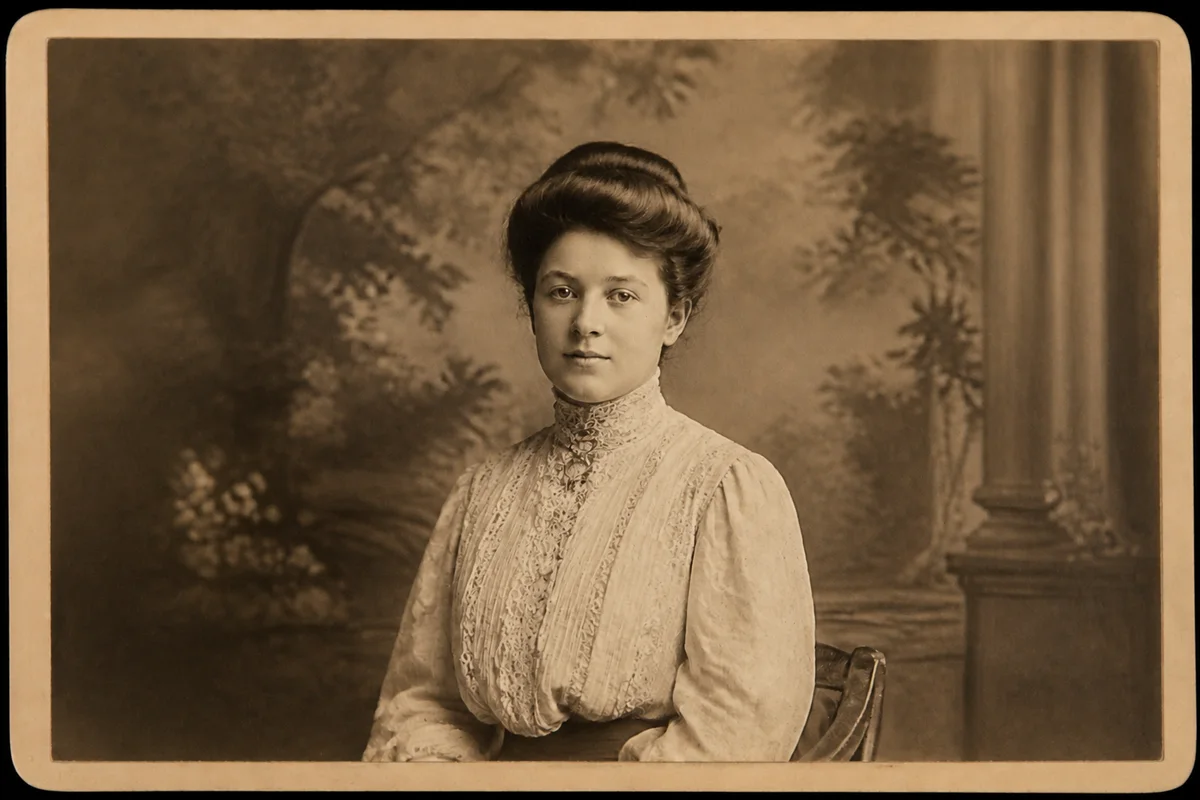
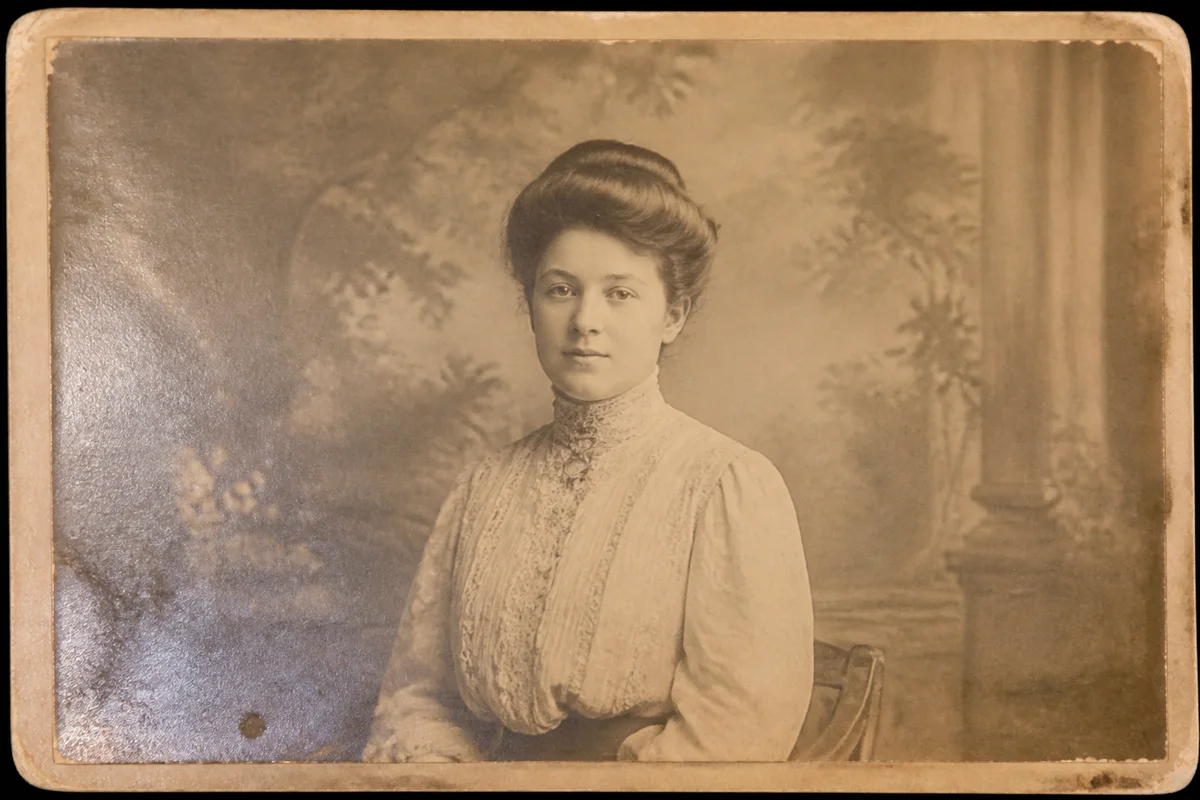
Watch the rescue unfold — pull the slider across.
The oldest photographs a family owns are usually studio portraits: stiff collars, painted backdrops, and an expression held through a long exposure. Cabinet cards, cartes de visite, tintypes — physical objects over a century old, with the scratches, silvering, and fade to prove it.
These portraits restore beautifully, because underneath the damage the studio photographer did careful work — good light, sharp focus, deliberate composition. AI removes the century: plate scratches close, silvered corners calm down, faded contrast rebuilds, and a face from 1895 looks back with startling presence. Colorization can follow for a version that collapses the distance entirely.
Scan the artifact once, restore digitally, and return the original to its acid-free sleeve — the family gets the ancestor, the archive keeps the object.
The problems this solves
- Silvering sheen and plate scratches obscure the image at every angle.
- Contrast has faded until the sitter merges with the painted backdrop.
- Card mounts are chipped, foxed, and stained around the image.
- The subject is often unidentified, and the face is too degraded to compare.
A workflow that works
Restore the artifact scan
A century of scratches, fade, and stains comes off in one pass, revealing the studio work underneath.
AI Photo RestorationBring the sitter's face forward
A clear face lets the family compare against other photos and family features — treat the recovered detail as an aid, not proof, for identification questions.
AI Face EnhancementColorize the century away
Color makes an 1890s ancestor feel like a person you could have met. Label the colorized version as an interpretation in the family record.
AI Photo ColorizerUpscale for display
Cabinet cards are small; upscaling produces a portrait that holds a real frame on a real wall.
AI Image UpscalerFrequently asked questions
How do I scan a tintype? It's metal and reflective.
Photograph it instead of flatbed-scanning if reflections are bad: soft indirect light, camera square to the plate, slight angle adjustments until the sheen clears. The AI works from that capture.
Should I restore the whole card or just the photo?
Capture the whole card — mount, studio imprint, and any inscriptions carry genealogical information. Restore a cropped version for display and keep the full scan for the record.
Can restoration help identify who this is?
It can make the face clear enough to compare with labeled photos and living relatives' features. Identification remains a judgment weighing dates, places, and resemblance — the clearer face is one input.
What's the cost to restore one ancestor portrait?
Signup includes 4 free credits, which covers a restoration and a colorization pass on your oldest family photograph.
Related use cases